The Kitchen Triangle Reimagined
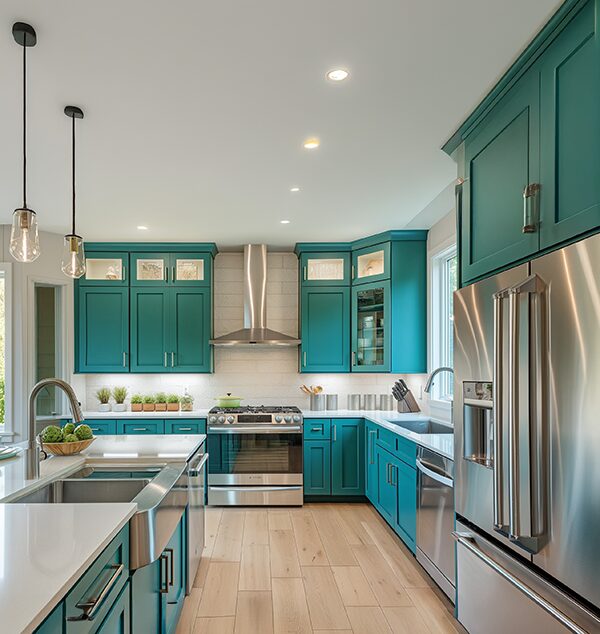
Since the 1940s, the “working triangle” has been known as the model of efficiency for modern kitchens. But as society changes, so do concepts of how kitchen space is utilized.
The kitchen triangle was designed to save steps between the most frequently used appliances—the refrigerator, cooktop/stove/oven, and the sink. This concept worked well for small single-cook kitchens, but today’s busy dual-income and multi-generational households prefer large kitchens where the family can gather, cook, and dine together.
Saving steps in a large kitchen requires multiple work stations. For example, food preparation begins with retrieving and laying out ingredients for rinsing, chopping and mixing, so the refrigerator-pantry-freezer can triangulate with an island food prep area, complete with a small bar sink for rinsing vegetables. A separate wall sink is optimal next to a dishwasher and trash compactor. A dish, glassware, and small appliance storage area can adjoin a beverage station for coffee or smoothies.
This way, families can use meal preparation as a bonding experience, performing different tasks smoothly and efficiently without getting in each other’s way.