Sign Up to Our Newsletter

    Author Archive

    What You Need to Know About Hazard Insurance

    How do you choose which homeowner’s policy to buy? There are several levels of protection that cover the structures on your property as well as personal possessions. One of the key distinctions is how the policy defines what’s covered. Named perils coverage is specific to certain catastrophic events. Open perils coverage addresses most events except those excluded by the policy.

    Ninety percent of homeowners choose the HO-3 policy, which covers damage to both your home and its contents at current replacement value, up to the policy’s limits. It also provides liability coverage if someone is injured on your property, as well as medical payments and additional living expenses if you’re displaced during repairs.

    Earthquake and flood damage are not typically included, but can be added through special riders. You may also need additional coverage for high-value items like fine art or jewelry. Be sure to photograph each room and its contents, and store that documentation in a secure place, such as a safe deposit box.

    Your monthly mortgage payment will typically include escrow for your homeowner’s hazard insurance. Failing to maintain proper coverage could result in your lender recalling the loan.


    When Should You Refinance Your Mortgage?

    As interest rates fluctuate, you may consider refinancing your mortgage to a lower interest rate, shorter loan term, or lower monthly payment. You may want to switch from an adjustable rate to a fixed-rate loan, or get rid of private mortgage insurance, or borrow more money for value-adding renovations to your home. To ensure you’re making the right decision financially, you must carefully weigh the costs of refinancing against the potential savings.

    Refinancing your mortgage from 7.5% to 6.5% can save you about $269 a month on a $400K loan, reducing your monthly payment by nearly 20%. You’ll have closing costs—just as you did on your purchase loan—of approximately $8,000. It will take 2.5 years to break even, so the longer you stay in your home, the more you’ll save. For a half-point difference, it will take five years to break even.

    Some lenders will give you a no-closing cost option in exchange for a higher interest rate on your refinance. New terms apply, so plan to stay in your home for a few years more.

    Don’t Give Homebuyers the “Ick”

    You’re used to living in your home, but homebuyers notice things you may overlook. What you don’t want is for a buyer to ever get the “ick” over something you could easily have fixed.

    Icky odors: No matter how loveable your pet is, a homebuyer doesn’t want to step over stinky dog beds and slobbery toys. People smells are even worse, so put out fresh linens before showings. Empty bedroom closets of odiferous shoes, athletic equipment or unwashed laundry. Clean refrigerators and empty trash cans.

    Icky grout/caulking: Worn grout and shrunken caulking lead to mildewy smells and blackish mold that can grow in the crevices. Take the time to strip, replace and seal surfaces that touch water.

    Icky dark rooms: Rooms in older homes tend to have insufficient fixtures for lighting. Use brighter bulbs, leave all the lights on for showings, open the curtains and make sure windows are washed.

    Icky problem fixes: Too many extension cords, space heaters, and fans make your home look dangerously out of date as well as unsightly.

    How the 10-year Treasury Note Yield Affects Mortgage Rates

    If you’re wondering why mortgage interest rates for consumers don’t follow the Federal Reserve’s fund rates to banks, there’s a good reason.

    Interest rates are tied to benchmarks based on how long the debt lasts. The federal funds rate applies to overnight lending between banks, while consumer mortgages are typically long-term, as much as 30 years.

    That’s why mortgage rates are more closely aligned with the 10-year Treasury note yield. According to Investopedia, the yield reflects the interest the government pays to investors over 10 years, making it a more relevant benchmark for long-term loans like mortgages. Most homeowners don’t stay in their homes for 30 years anyway—the average is eight years, while the median is 13.2 years.

    Lenders set mortgage rates by adding a “spread” on top of the 10-year Treasury yield. This spread accounts for the difference between mortgage-backed securities (MBS) and Treasury yields, as well as risk, inflation expectations, and market demand.

    How Long Should You Occupy the Home You Own?

    When you buy a primary residence, you benefit from numerous perks—if you occupy your home long enough.

    Not only can you get tax breaks for the mortgage interest you pay—up to $750,000 of debt if you bought after 2017—you can avoid paying capital gains on your home when you sell—up to $500,000 for married joint filers and $250,000 for singles. But you must have lived in the home for two out of five years as your primary residence.

    When you sell your home, it typically takes about five years to build enough equity (the amount you own vs. the bank) to cover the closing costs on both the sale and your next purchase. These costs include agent commissions, mortgage fees, and other transaction expenses. You can build equity in several ways: through a larger down payment, regular or extra mortgage payments, home improvements, and natural appreciation.

    To estimate your equity, contact your Berkshire Hathaway HomeServices network professional for a market value analysis. Then simply subtract what you owe from your home’s current value.

    The Top Remodeling Projects for 2025

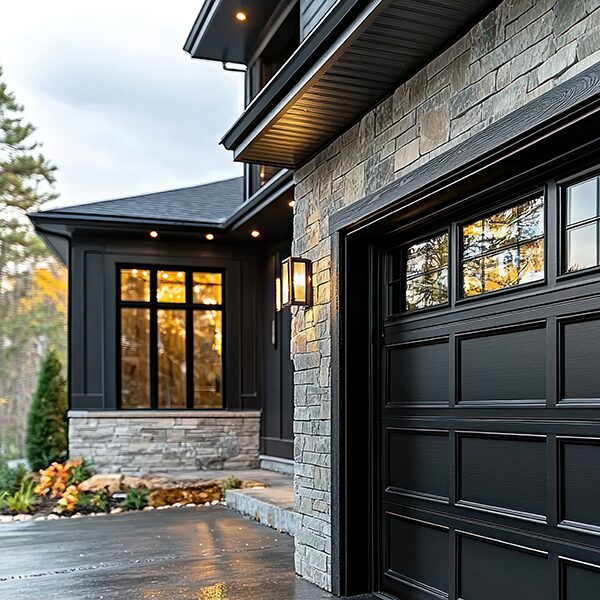
    Every year, Remodeling Magazine ranks the national average costs of various home remodeling projects by the highest resale value and costs recouped. While most projects impact only parts of a home, their resale value is estimated in the sales price when the home is sold. For example, the top project is a garage door replacement that costs $4,513 for a resale value of $8,751, making costs recouped at 193.9%.

    The top four out of five projects are exterior, which supports the importance of curb appeal. Behind the garage door replacement, they include a steel entry door at $2,355 with a resale value of $4,430; manufactured stone veneer at $11,287 with a resale of $17,291; and a grand fiberglass entrance at $11,353 with a $11,054 resale value.

    Realtor.com also has a list of remodeling projects with the greatest ROI, including energy-efficient upgrades (70-100%); minor kitchen remodel (70-80%); and bathroom updates (60-70%).

    Offering little ROI are luxury upgrades (50-60%); swimming pools (40-50%); high-end landscaping (30-60%); home office renovations (45-55%), and sunrooms/enclosed porches (45-55%).

    What is a Plant Hardiness Zone?

    First-time homebuyers may not be familiar with the best ways to choose plants that will thrive for their new home, but a good starting point is the U.S. Department of Agriculture’s (USDA) Plant Hardiness Map.

    The USDA’s 13 Plant Hardiness Zones are defined by the by the average annual extreme minimum winter temperature, with each zone covering a 10 °F range. To capture finer microclimates, every zone is further divided into “a” (colder 5 °F half) and “b” (warmer 5 °F half) subzones. For timing your plantings, also note your zone’s average first and last frost dates.

    Hardiness zones exist to guide you toward plants that can survive your area’s coldest winters. For customized tips—such as which plants thrive together in sun, shade or drought; which species draw birds or repel insects; the best window for setting transplants; and when to bring vulnerable plants indoors—ask your local nursery or a landscape architect.

    What Lot Value Means to Home Sellers

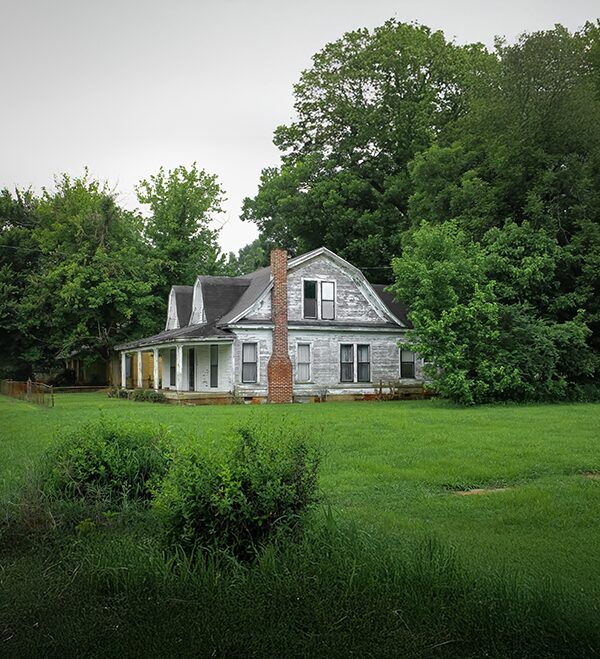
    Getting an older home ready for sale is a lot of work, sometimes requiring extensive repairs and updates to make it attractive enough to today’s homebuyers. But if you don’t want to “spend money to make money”, there are some advantages to selling your home for lot value.

    Lot value simply means the value of the land only. Property is assessed in two parts— the land and its structure—by local taxing authorities. As the land’s value rises, the structure can depreciate to zero due to structural issues, damage, obsolescence, and other reasons. A house deemed a “tear-down” by the marketplace may be purchased by a homebuyer intending to perform extensive renovations, or to demolish to make way for a new home. In an aggressively appreciating housing market, homebuyers will look favorably on a lot-value home.

    As the owner, all you need to do is make sure the property is safe and accessible for homebuyers to visit, and leave the marketing, showings, and negotiations to your Berkshire Hathaway HomeServices network professional.

    The Meaning of “Days on Market”

    When you see “Days on Market” (DOM) next to a listing, it’s more than just a number—it’s a measure of how long a home has been chasing its next owner. DOM starts ticking the moment your agent feeds the property into your local Multiple Listing Service and stops once buyer and seller sign on the dotted line.

    Why are days on market important? Housing sales are subject to ongoing changes in market conditions—either prices are rising or falling, sellers are offering incentives or none at all, or they’re reducing listing prices or holding firm. This information and more is supplied by reports created by listing and buyers’ agents to show their clients.

    Days on market also have a trendline: they’re either getting longer or shorter. If a home lags on the market longer than current market conditions, it’s a good clue for the seller that it’s time to lower the price, and it also tells homebuyers that the home is ripe for negotiation.

    Such transparency in metrics evens the playing field for both sellers and buyers.

    Tips to Strengthen Your Internet

    Internet Service Providers (ISPs) save money and manage network traffic by “throttling” broadband connections, resulting in “slower loading times, buffering during streaming, and reduced download or upload speeds.” The average internet speed is 214 Mbps in the U.S. Most providers put data caps on the amount of gigabytes (GB) they provide, which favors denser populations. AT&T DSL caps at 1,500 GBs for 120 million customers while satellite provider HughesNet caps between 12-200 GBs for 330 million subscribers worldwide.

    If your service is slow, you can pay for more gigabytes per second but that doesn’t guarantee connectivity even for unlimited data plans. Also try situating your router and modem high up off the floor, away from other electronics, and within the center of the home. Check for dust in the device, clean and reboot. Update older devices to get a stronger signal.

    For a small subscription fee, add a virtual private network (VPN) which “establishes a digital connection between your computer and a remote server…” to encrypt your personal data, mask your IP address from your ISP, and prevent throttling.